
East Peoria Directory Years
The strongest East Peoria city directory run is held by Fondulac District Library. Its collection starts in 1927 and continues to the present. The books are local-history material, so they stay in the library and must be requested through Adult Services. Earlier work often shifts from city books to county directories, land records, and regional collections. The table separates those sources because their place labels and entry rules are not interchangeable.
| Collection | Years | Where Held | Access |
|---|---|---|---|
| East Peoria city directories | 1927-present | Fondulac District Library | Adult Services request; noncirculating |
| J.A. White Tazewell directories | Selected editions, 1914-1930 | Pekin Public Library | Historical collection |
| Omi E. Root Pekin directory | 1861 | Pekin Public Library | Article and library research route |
| Peoria city directories | 1844-1916 | Peoria Public Library | Regional context; verify place |
No source reviewed supplied a complete volume-by-volume East Peoria inventory. Confirm the exact year before traveling. A gap in the local run does not justify treating a Pekin or Peoria entry as an East Peoria record. County books can cover people outside Pekin, while the 1861 Root volume is a model for early entry structure rather than proof that it includes every East Peoria household.
Using East Peoria Directory Books
Fondulac District Library explains how to request its city directories. Staff retrieve the books at the Adult Services desk and generally provide two at a time. A photo ID or library card is held at the desk, and the researcher remains on the second floor. Pencil is allowed, but food and scissors are not. A Scan Station and copier make it possible to preserve the title page, year, abbreviation key, and relevant entry together.
The collection page shown below records both the East Peoria run and its handling rules. Those details matter because a sound citation needs more than a cropped surname.
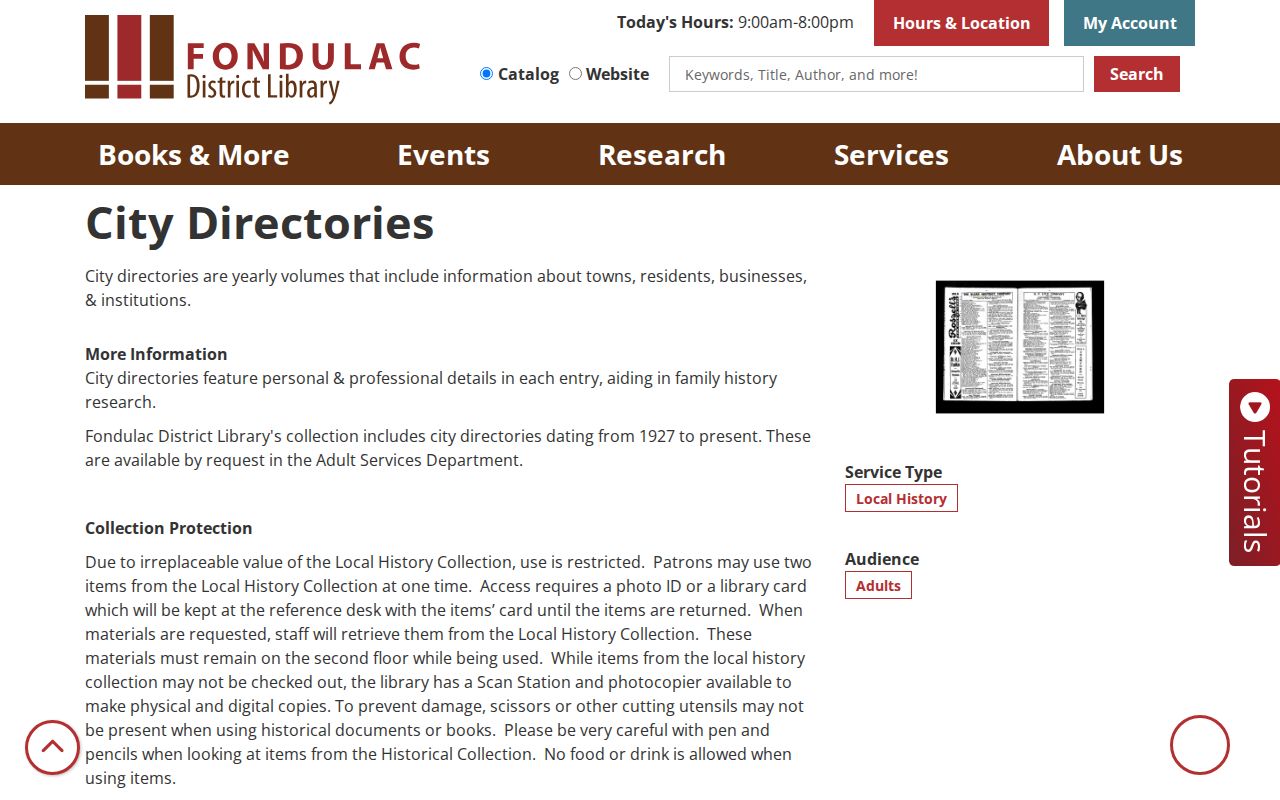
Capture the book title, publication year, page, column, and symbol key. That record makes another reader's check possible.
East Peoria County Directory Clues
The J.A. White Tazewell County directory account identifies eight editions: 1914, 1916, 1920, 1922, 1924, 1926, 1928, and 1930. J.A. White of Peoria published them, and the library says the first Tazewell directory appeared in 1913. These books include people age 16 and older outside Pekin, county towns, Rural Free Delivery material, and a Pekin business section.
A cross marks a head of household. A dot marks a landowner. Neither sign identifies every person who lived at the address. The source image helps show why the countywide arrangement and its marks must be read before transcribing a row.
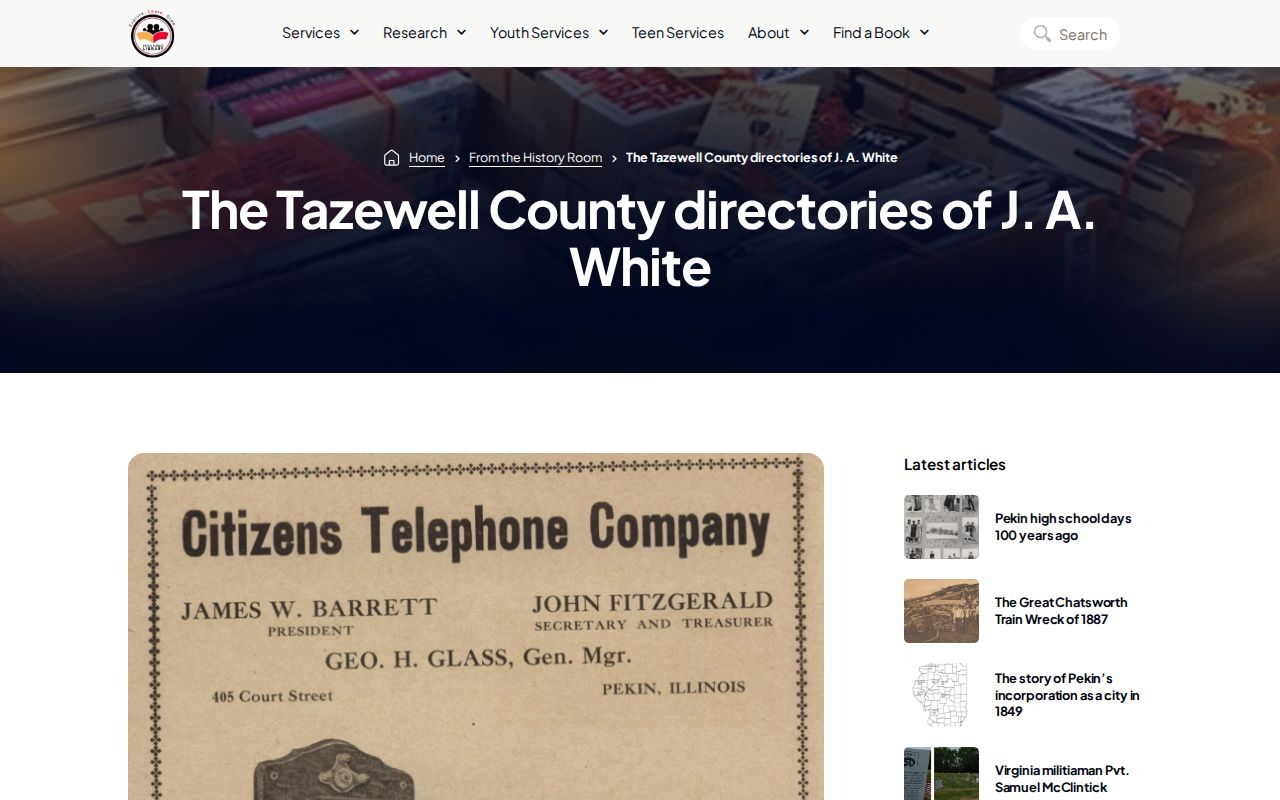
These books bridge the period before Fondulac's local run, but the town heading and rural route must stay attached to each result.
Reading East Peoria Directory Entries
Read the key before reading the name list. A city directory compresses facts to save space, and the same letter can mean different things in different books. Record the line exactly, including punctuation and marks, before expanding it. White county books identify heads of household and landowners with symbols. Root's early directory arranges its Names section by head of household. Later books may add a street-order section that lets an address be checked separately.
| Person | Name as printed; often a head of household in early books |
|---|---|
| Address | Street, house number, rural route, or town label in that edition |
| Household mark | A cross denotes a head of household in White books |
| Land mark | A dot denotes a landowner in White books |
| Section | Name order, street order, business list, or county-town list |
- Criss-cross directory
- A street-order list used to find names printed beside one address.
- Householder index
- A list centered on the person treated as household head, not a census of all occupants.
- Abbreviation key
- The book's guide to short forms and symbols. Save it with every transcription.
A listing proves that the publisher linked a name and place in that edition. It does not prove title, continuous residence, or every member of a home.
Early Directory Structure Near East Peoria
Pekin Public Library's account of Omi E. Root's 1861 directory describes a 93-page volume published in June. Its alphabetical Names section occupied pages 12 through 64. Other sections covered streets, business, government, transport, schools, associations, and religion. The layout shows why an early city directory search should not stop at the name pages.
The source image provides a visual point of entry to that early volume. Root's book is tied to Pekin, so use it as regional and county-seat evidence unless an entry itself supports an East Peoria-area connection.
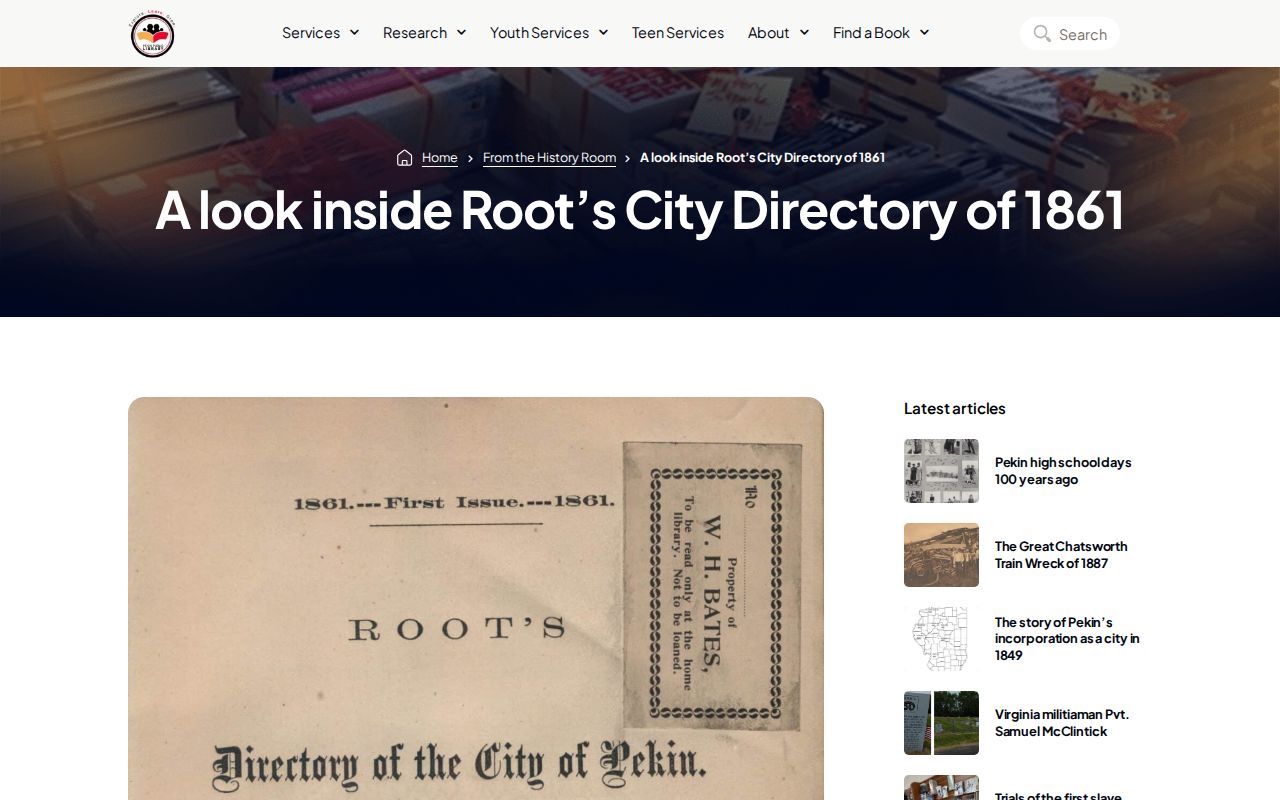
Transport headings such as railroads and packets can help when a household was described by a route or landmark instead of a modern street number.
East Peoria Directory Newspaper Checks
A directory year is a snapshot. Newspapers can narrow the date of a move, death, public event, or address change. The Illinois Newspaper Project lists Fondulac holdings for the Tazewell Courier East Peoria from 1956 to 1980, East Peoria Courier from 1980 to 1997, and East Peoria Times-Courier from 1997 to the present. Regional runs include the Journal Star from 1971 onward.
The project listing shown below supplies date coverage instead of a vague claim that newspapers exist. Search a surname with a street, school, club, obituary, or event term.
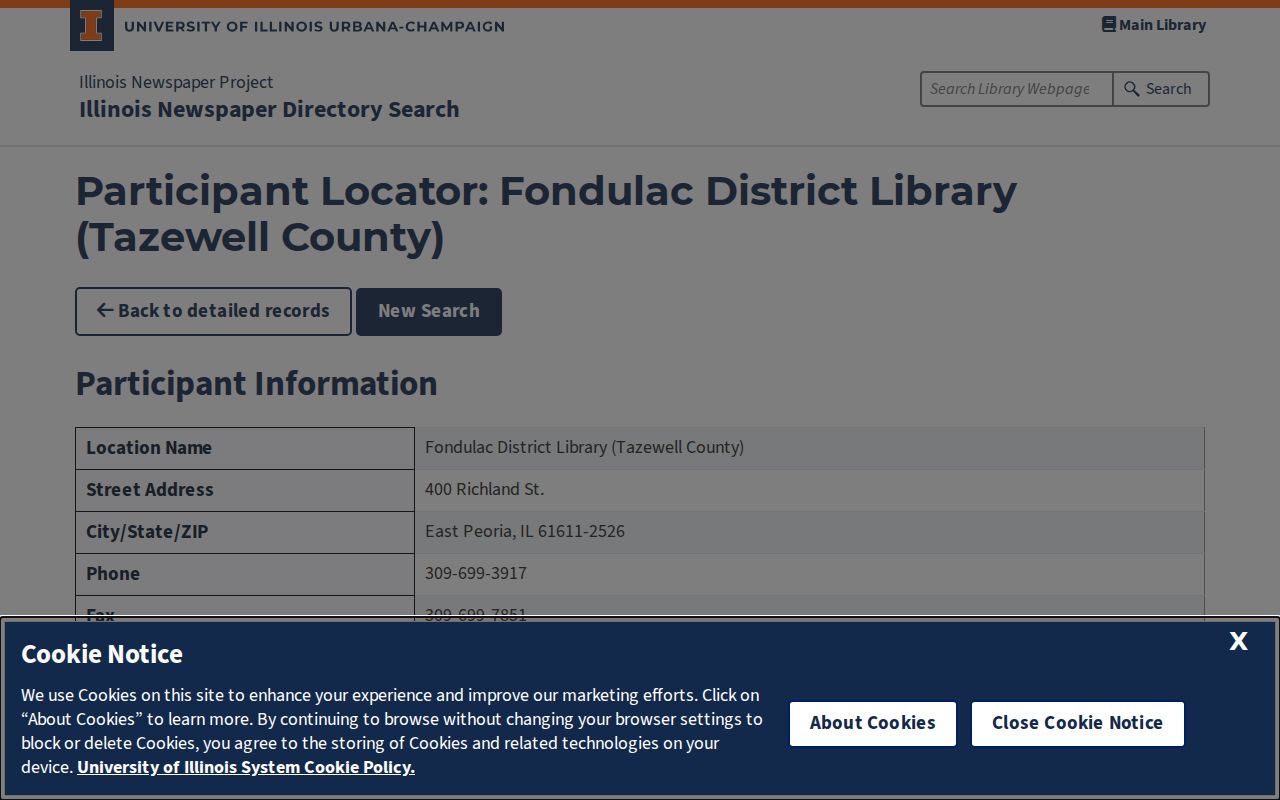
A notice can support a dated association, but it is not automatic proof of legal residence.
Note: Record the newspaper title, issue date, page, and directory year so two different dates do not become one claim.
Regional East Peoria Research Shelves
Pekin Public Library holds county and city directories, yearbooks, vertical files, census material, maps, atlases, cemetery sources, and a Tazewell land index covering 1827 through May 1838. The Illinois State Archives inventory adds older county births, deaths, marriages, court files, dockets, naturalizations, military discharges, and assessor books. Its live listing identifies the IRAD depository and accession data needed for an order.
Peoria Public Library's Local History and Genealogy department is another regional fallback. It reports Peoria directories from 1844 to 1916, yearbooks, funeral records, obituary indexes, Sanborn maps, microfilm, and census access. The image below shows that research service, not a substitute East Peoria collection.

Keep the source's own location label in the citation. A book shelved in Peoria or Pekin may be useful without proving its subject lived there.
East Peoria Names Across Time
Modern East Peoria was not always indexed under that name. The official city history identifies Bluetown, Coleville, and Hilton. Bluetown was platted in 1864, Hilton in 1869, and the communities were incorporated under Hilton in 1884. The village became East Peoria in 1889. Fondulac, platted in 1855 around Mill, Main, and Depot streets, is another useful place term.
Search the surname under the name used in the source year. Rail, river, Farm Creek, coal, brick, and flood references can narrow a vague entry, but a landmark is not an exact address. A plat, deed, or directory line must make that final connection. This historical-name relay is especially helpful before the 1927 local directory run begins.
Trace Family Through East Peoria Directories
Move through city directories one year at a time. That keeps a move, spelling change, or missing edition visible. Pair a directory entry with the nearest public federal census, then use newspapers or an obituary to explain a gap. The process works best when every result retains its publication year and place heading.
- Find the first likely name entry and copy it exactly.
- Check the prior and next available years for the same surname and address.
- Use the street-order section, if present, to test the address from the other direction.
- Compare the nearest census year while keeping the household and directory dates separate.
- Use a newspaper, obituary, cemetery source, deed, or probate file to explain the end of the run.
A missing name has several possible causes. The person may have moved, died, changed a surname, been omitted, or appeared under another place label. The disappearance is a prompt to check another source, not a conclusion. When the goal becomes a current person check, the East Peoria resident lookup uses modern official records instead of extending a historical listing beyond its date.
Cite East Peoria Directory Findings
A city directory citation should preserve the publisher's evidence, not merely the name that looked useful. Write down the volume title, year, page, column, section heading, and repository. Copy the whole entry with its punctuation and symbols. If the book provides a street-order section, cite that second entry separately. Photograph the abbreviation key and title page before leaving the library.
Dates need special care. A 1930 directory, a later newspaper notice, and a modern parcel card describe different moments. Put each in its own evidence row. State whether the result is a directory listing, a deed party, an assessed owner, or an obituary subject. That wording prevents a printed address from becoming a claim of continuous residence.
When an exact East Peoria volume cannot be found, note the gap. A White county book, Pekin directory, Peoria regional source, or IRAD series may lead to the next record, but its own jurisdiction stays in the citation. For missing municipal material, the East Peoria archive can be searched by keyword, category, and date. A narrow city FOIA request may seek existing, nonexempt records by address and date range, though the city is not required to create a new historical directory.